


How to Evaluate a Business Central Partner for Multi-Site Retail: A Checklist for IT Directors
When an ERP partner talks about "hypercare," they usually mean a short, defined window right after go-live. Typically two to four weeks. The implementation team is available, response times are fast, and the most obvious issues get resolved quickly. Then the period ends, and the client transitions to a standard support retainer or takes responsibility internally.
For many back-office ERP deployments, that model is workable. But retail and sports operators are different. The moments that genuinely test a new system are not the ones that occur in the first two weeks. They arrive when the system first encounters real operational pressure: a kit launch, a matchday with a full stadium, a peak trading weekend. These events happen months after go-live, long after most partners have stepped back.
This post explains why that matters, what breaks when support ends too soon, and what a better model looks like for operators in retail and sport.
What "HyperCare" Actually Means in ERP
The term hypercare entered the ERP industry to describe a stabilisation period that bridges implementation and steady-state operations. The standard model involves daily check-ins, elevated response SLAs, and a dedicated team on standby while the organisation learns to use the new system under real conditions.
It typically lasts two to four weeks. Exit criteria centre on transaction stability, user adoption metrics, and a reduction in support ticket volume. Once those thresholds are met, the hypercare phase ends. The partner scales back. The client moves to a standard support arrangement, or the project is formally closed.
This model was built for environments where the riskiest moment is the go-live itself: the data migration, the cutover, the first few days of live running. Once the system stabilises and volumes normalise, the standard assumption is that the hard part is over.
It was not designed for retail. And it was not designed for sport.
Why Retail and Sports Complexity Peaks Well After Go-Live
A new Business Central or LS Retail implementation in a retail or sports context does not reach its operational peak in the first fortnight. It reaches it the first time the system encounters conditions that no test environment can fully replicate.
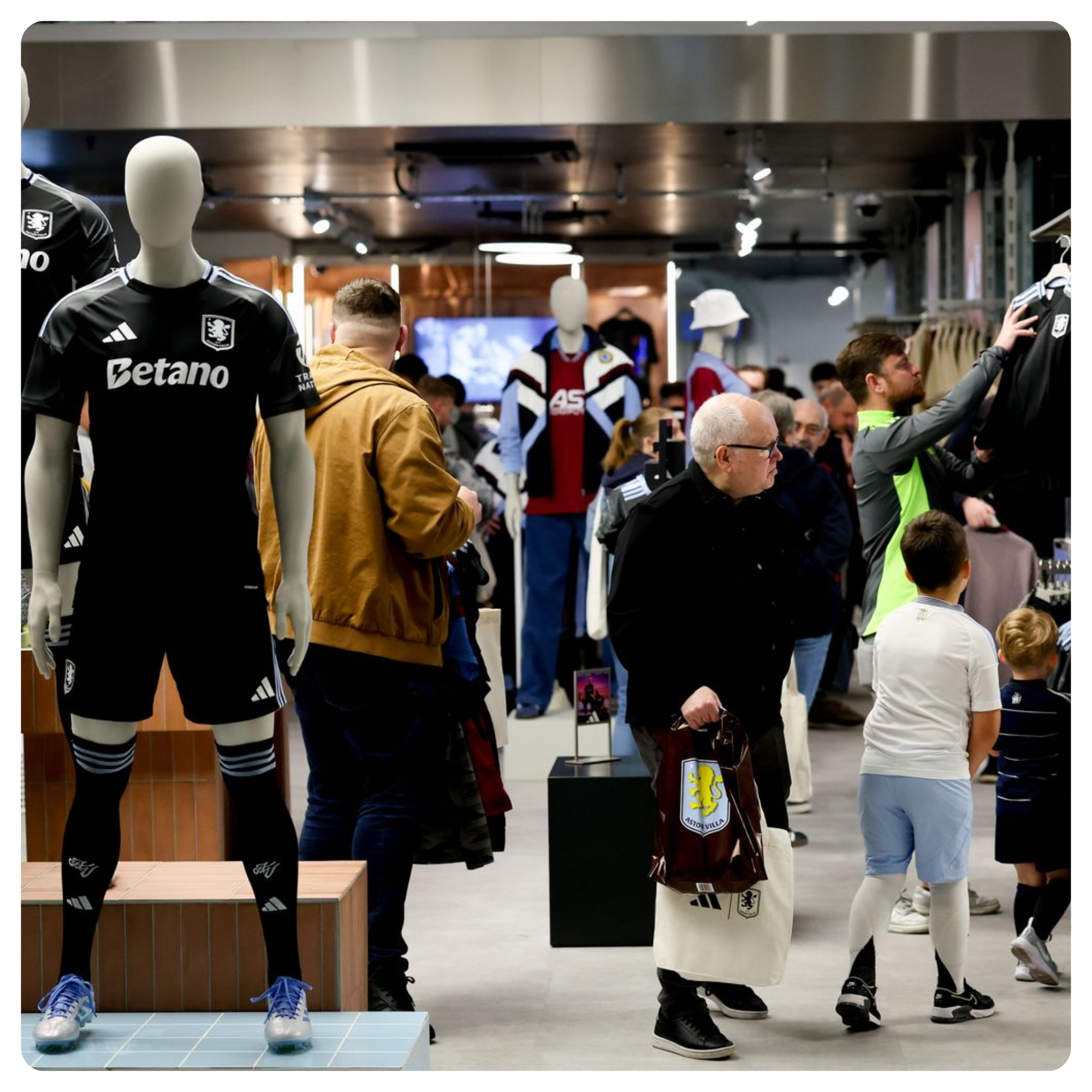
Take a sports club kit launch. Online and in-store demand spike within the same narrow window. Inventory accuracy is tested across multiple channels in real time. The ERP needs to keep pace with transaction volumes that may be ten times the normal daily rate, while maintaining accurate stock records for a product with finite availability. If anything breaks, the damage is immediate: oversells, fulfilment delays, and disappointed fans who do not forget it. The commercial and reputational cost arrives before anyone has had a chance to diagnose the root cause.
The same logic applies to a specialist retailer approaching their first Bank Holiday or end-of-season clearance on the new platform. The risk is rarely that the system cannot handle the load in principle. It is that configuration decisions made during implementation, which seemed sound at the time, turn out to have edge cases that only surface under volume. Discovering this in week twelve, without a partner who knows the project history, is a very different problem from discovering it in week two.
None of this happens inside a standard two-to-four-week hypercare window.
What Goes Wrong When Support Disappears at the Wrong Time
The consequences are not abstract. When a system issue occurs in a high-stakes retail or sports environment, the cost is immediate and often unrecoverable.
The obvious version of this is a POS failure on matchday: fans cannot buy, and unlike a missed web sale, the opportunity does not come back. But the more common version is subtler. A loyalty scheme that is not writing transaction data back to the CRM correctly from week one creates a gap in customer records that compounds quietly for months. Inventory that looks accurate but drifts due to an integration issue only becomes visible when volumes increase. By the time these problems surface, unpicking them is significantly harder than preventing them would have been.
Microsoft's own implementation guidance acknowledges the pattern: post-go-live support budgets are frequently exhausted faster than planned, because real-world operational conditions reveal issues that testing cannot anticipate. The gap between "works in testing" and "works on a high-volume matchday" is consistently wider than organisations expect when they plan their project.
Most of these issues trace back to implementation decisions rather than operational failures. A configuration choice that looked correct in week two has edge cases. A data migration that worked for the initial dataset creates problems at scale. Diagnosing this properly requires someone who knows the history of the project, not someone reading a ticket cold.

The Questions Most Buyers Do Not Ask
When organisations evaluate an ERP partner, the selection process focuses almost entirely on implementation. Can the partner configure Business Central for our specific setup? Do they have experience with LS Retail? Have they worked in sport or retail before? What does the project plan look like?
These are the right questions to ask. But most buyers do not ask the question that determines long-term value: what does support look like twelve months after go-live?
The answers vary significantly between partners, and the differences matter more than they appear on paper. A standard retainer with SLA-based response times is not the same as a named account relationship where someone who knows your specific configuration stays engaged as your business evolves. That distinction becomes real when something breaks at 9pm before a matchday, or when a system change you need touches something that was configured differently two years ago.
Before you sign with any partner, it is worth asking these questions directly:
- Who handles a critical issue during a matchday or a major product launch? Is it the same team who built the system, or a generic support queue?
- What is the escalation path for a priority-one issue that occurs outside business hours?
- How does the support model adapt as the business changes, new locations open, or new channels are added?
- If an issue emerges six months after go-live that is rooted in an implementation decision, who investigates it and how?
A partner who can answer these questions clearly, with named people and defined processes, is structured differently from one who defaults to a retainer agreement and a ticket system. The difference shows when it matters most.
What Effective Long-Term Support Actually Looks Like
The most effective post-go-live support models in retail and sports share a few characteristics that distinguish them from the industry standard.
The same people stay involved. Implementation knowledge does not transfer cleanly through documentation. A consultant who configured your inventory rules, set up your POS integration, and was present for the decisions made during the project is in a fundamentally better position to diagnose a problem in month six than someone encountering the system for the first time through a support ticket. In environments where system decisions have long histories and complex interdependencies, continuity of knowledge is a practical operational requirement, not a nice-to-have.
The model is proactive rather than reactive. A strong support partner does not wait for problems to surface and then respond. They monitor system health, track how the platform is being used, and flag emerging issues before they reach the point of disruption. For a sports or retail operator, this matters most in the weeks before pressure arrives: a health check before the new season, an integration review before a major launch, not after something has already gone wrong.
The relationship evolves with the business. Technology requirements do not stay fixed after go-live. New channels open, new product categories launch, reporting needs change as the organisation grows. A support partner who is genuinely engaged anticipates these changes and advises on how the system needs to evolve, rather than simply keeping existing functionality running.
This is the structural difference between a standard hypercare period and an ongoing operational partnership. One is designed to get you through the first fortnight. The other is designed to support the moments that define whether the system delivers on the investment it required.
See What This Looks Like in Practice
Ready to talk about support that works beyond go-live?
BC4 works with sports clubs, stadium retailers, and specialist retail operators to build systems that perform under real operational pressure, and to stay engaged through the moments that matter. If you want to understand what long-term support looks like for your setup, get in touch and we can walk you through it.
Frequently Asked Questions
What is the difference between ERP hypercare and ongoing post go-live support?
Hypercare is a defined stabilisation period, typically two to four weeks after go-live, during which elevated support is provided to resolve immediate issues and reinforce user adoption. Ongoing post go-live support is a longer-term arrangement that keeps a partner engaged beyond that initial window. For retail and sports operators, the ongoing support phase is often more important than the hypercare period itself, because the highest-risk operational moments occur months after go-live.
How long should post go-live support last for a Business Central implementation?
There is no universal answer, but for retail and sports operators the support arrangement should remain active at least through the first full operating cycle: the first matchday season, the first major product launch, the first peak trading period. These are the events that genuinely test a new system. Scaling back support before they have passed exposes the organisation to significant operational risk.
What should I ask a Microsoft Dynamics partner about their post go-live support?
Ask who specifically handles a critical issue six months after go-live, what the escalation path is outside business hours, and whether the people supporting the system are the same people who built it. Also ask how support adapts as your business changes. Partners with strong post go-live models will answer these questions with specific names, processes, and SLAs. Partners who struggle to answer them are likely relying on a generic ticket queue.
Why does ERP support matter more for sports clubs than standard retailers?
Sports club retail operates in bursts of extreme demand around matchdays and kit launches, rather than a steady flow of transactions. These peaks are high-stakes: a system failure on matchday loses revenue that cannot be recovered. The complexity of managing fan data, loyalty, and in-stadium retail simultaneously also means that configuration errors have a wider impact than in a standard retail environment.
Does BC4 offer post go-live support for Business Central and LS Retail?
Yes. BC4's HyperCare service is designed as an ongoing operational partnership rather than a short-term stabilisation period. It keeps the same team engaged through the first major operational milestones and beyond, providing proactive monitoring, named escalation contacts, and support that evolves as the business grows. Get in touch and we can walk you through it.