
Retail Management Systems for Sports Clubs: Are Yours Connected?
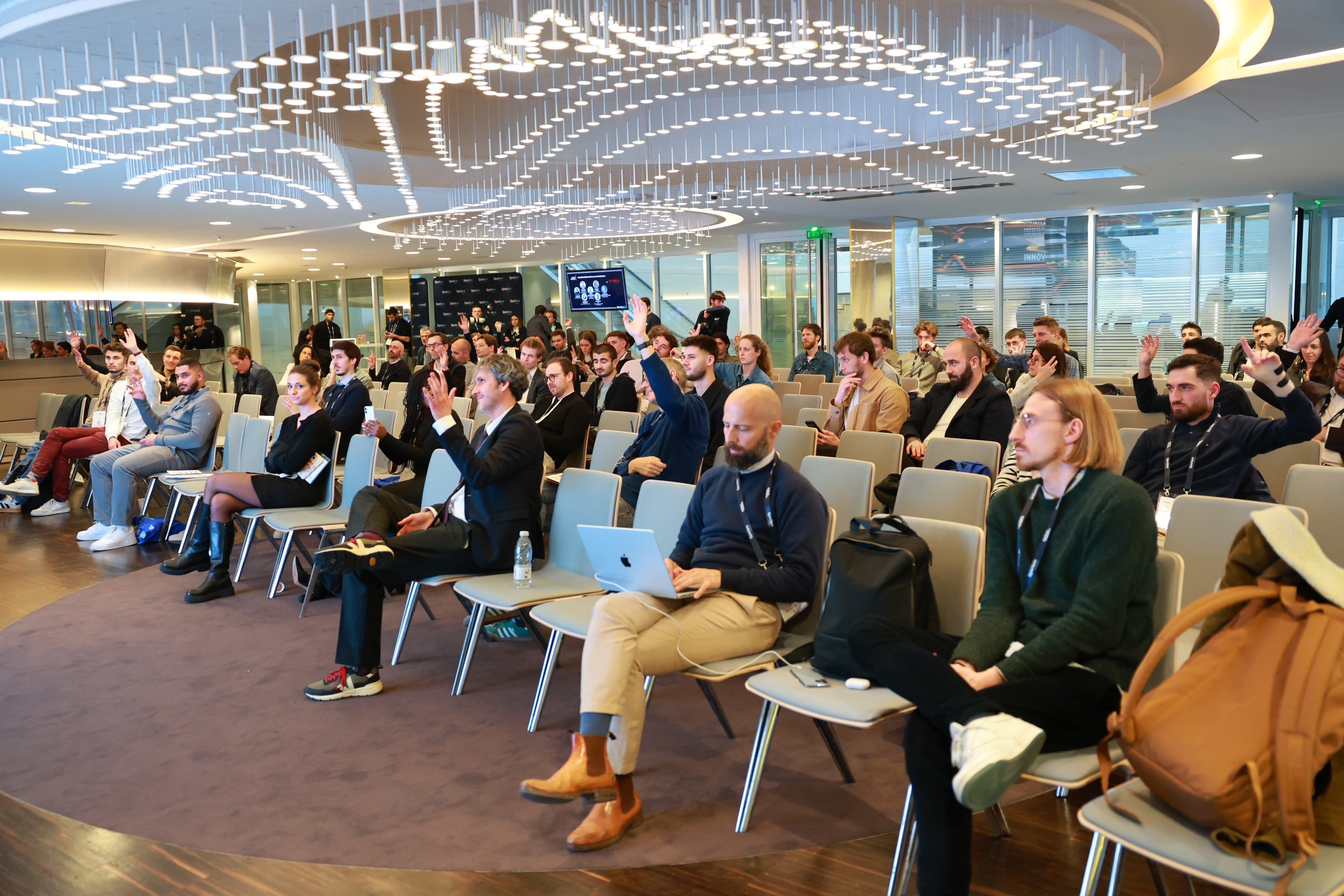
BC4 recently attended Sportem in Paris, one of the most important gatherings for sports organisations, rights holders, and commercial partners across France and wider Europe. Across two days of conversations with clubs, federations, venue operators, and commercial teams, one thing became very clear. The French sports market is entering a period of structural change, and retail and commerce are moving to the centre of that conversation.
While many discussions touched on fan engagement, data, sponsorship, and digital experiences, the most consistent underlying theme was simpler. Sports organisations are under pressure to do more with what they already have, and that pressure is exposing the limitations of fragmented retail and finance systems.
This article captures the key takeaways from those conversations, the trends we see emerging in the French market, and why connected retail infrastructure is becoming a strategic priority rather than a back-office concern.
1. Sports organisations are shifting from stadium retail to sports commerce
One of the most noticeable changes compared to similar events even a few years ago was the language people were using. Conversations were less about stadium shops or matchday tills, and far more about commerce as a whole.
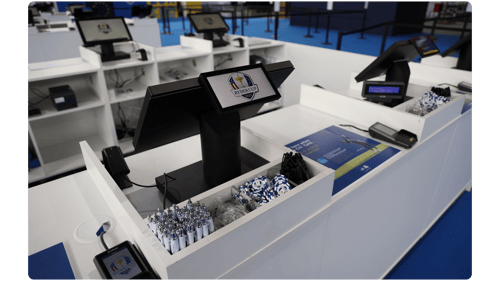
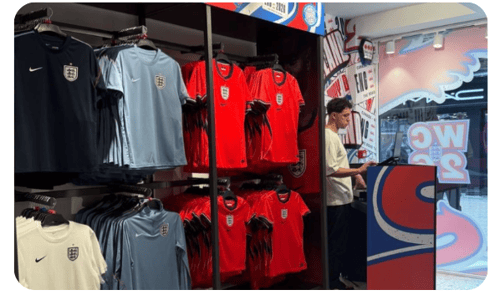
Clubs and federations are increasingly thinking beyond physical venues. Retail now spans permanent megastores, pop-ups, ecommerce, mobile selling, international shipping, and third-party marketplaces. For many French organisations, this expansion has happened quickly, often layered on top of systems that were never designed to operate as one.
The result is growing complexity. Different platforms for POS, ecommerce, finance, stock, and reporting, each working in isolation. What looks manageable at a single store level becomes a problem once organisations try to scale, introduce new channels, or report accurately across the business.
The key takeaway is clear. Retail is no longer a side function. It is a core commercial engine, and it needs infrastructure that reflects that reality.
2. Data confidence is becoming a commercial issue, not just an IT one
Another recurring theme at Sportem was trust in data, or more accurately, the lack of it.
Many commercial and finance leaders described situations where numbers differed depending on which system they were looking at. Sales figures that did not align between POS and finance. Stock reports that required manual adjustment. Ecommerce data that lived outside the core ERP.
This is no longer just an operational frustration. It directly affects decision-making around pricing, promotions, stock planning, and international expansion. Several organisations highlighted how difficult it is to answer basic questions quickly, such as total retail revenue by channel, true margin by product line, or stock availability across locations in real time.
In the French market in particular, there is increasing pressure for stronger governance, clearer reporting, and audit-ready financial processes. Fragmented systems make this harder, not easier.
What stood out was that commercial leaders are now driving these conversations alongside IT and finance. Data confidence has become a board-level concern.
3. Matchday pressure exposes system weaknesses
Matchday retail remains one of the most demanding environments in sports commerce, and it featured heavily in discussions at Sportem.
High footfall, short selling windows, temporary staff, peak transaction volumes, and zero tolerance for downtime all combine to stress retail systems. Many organisations admitted that their current setups work well enough on quieter days, but struggle under real matchday pressure.
Common issues included slow tills, stock discrepancies between stores, delayed reconciliation, and post-match reporting that takes days rather than hours. These problems are often accepted as part of matchday operations, but in reality they represent lost revenue and a compromised fan experience.
French clubs are increasingly aware that matchday is not the place to discover system limitations. There is growing appetite for platforms that are designed for scale, speed, and resilience, rather than stitched together from multiple point solutions.
4. Integration, not replacement, is the real priority
A particularly important nuance from Sportem was that organisations are not looking to replace everything they already use.
Most clubs and federations have established ticketing platforms, CRM systems, and fan engagement tools. The conversation is not about removing these, but about ensuring retail and finance systems integrate cleanly with them.
This is where many legacy retail platforms fall short. They were built as standalone systems, making integration complex, fragile, or expensive. As a result, organisations rely on workarounds, manual processes, or partial visibility.
What French sports organisations are increasingly seeking is a connected backbone. A core retail and finance platform that acts as a single source of truth, while integrating with existing systems where it makes sense.
This approach reduces risk, protects previous investment, and creates a foundation for future growth.
5. Technology capability is now a commercial enabler, but many organisations are under-skilled
One of the strongest underlying signals from Sportem was not just about platforms, it was about capability.
We spoke with clubs and service providers who are actively trying to modernise retail, data, and fan engagement, but many are doing so with limited internal technology leadership. In several organisations, technology architecture is still treated as an afterthought, owned tactically rather than strategically.
This creates a clear gap. You cannot optimise stock, unify reporting, or build joined-up fan journeys if your data foundations, integration approach, and system ownership are not properly designed. Tools alone do not solve this. Without the right skills, governance, and architectural thinking, even good technology becomes fragmented over time.
The organisations best positioned for the next phase of growth will be those that invest either in strong internal capability or in long-term partners who can provide strategic technology leadership. This includes setting a clear IT and data strategy, governing how systems connect, and ensuring the architecture supports growth rather than just day-to-day operations.
How BC4 is helping sports organisations respond
The themes that emerged at Sportem are not theoretical for BC4. They reflect the challenges we are already helping sports organisations address across Europe.
As a specialist Microsoft partner, BC4 designs, implements, and supports retail and data platforms built on Dynamics 365 Business Central and LS Retail. In practice, this means providing a single operational backbone for retail operations, inventory, orders, and finance, while integrating with ticketing, CRM, ecommerce, and fan engagement platforms.
Rather than selling point solutions, BC4 focuses on reducing complexity. Matchday retail, ecommerce, pop-ups, and permanent stores all operate on the same platform, with real-time visibility across sales, stock, and financial data.
Just as importantly, BC4 provides the strategic and operational expertise required to make these platforms work long term. We help organisations define their architecture, design clean integrations, and ensure ownership and governance are built into the solution, not bolted on later.
This delivers clear benefits across the organisation. Commercial teams gain reliable insight into performance and margin. Finance teams benefit from cleaner data, faster close processes, and confidence in reporting. IT teams gain a modern, supported platform that integrates cleanly with the wider technology landscape.
Where the French sports market is heading
Based on conversations at Sportem and wider market signals, several trends are becoming clear.
Retail and commerce will continue to professionalise, with greater focus on scalable infrastructure rather than short-term fixes. Data integration will play a decisive role in technology decisions, particularly where finance and governance are concerned. Technology capability and operational resilience will become non-negotiable, especially on matchdays and during peak trading periods.
Finally, sports organisations will increasingly look for long-term partners, not just vendors. Implementing connected systems requires sector understanding, strong delivery, and the ability to evolve alongside the organisation.
Final thoughts
Sportem Paris confirmed that the French sports market is at an inflection point. Retail is no longer secondary, and commerce is no longer confined to physical venues.
Organisations that invest in connected infrastructure and the capability to manage it will be better positioned to grow revenue, protect performance, and make confident decisions. Those that continue to rely on fragmented systems and short-term fixes will find it increasingly difficult to keep pace.
For BC4, the event reinforced that our focus on connecting retail, finance, data, and technology capability is not just relevant. It is becoming essential.
If you want to explore how a connected retail and finance platform could support your organisation’s next phase of growth, speak to BC4 about building a scalable sports commerce foundation.